Day Porter vs Nightly Janitorial: Which Does Your Facility Need
Quick Answer: A day porter keeps your facility presentable while people are in it, handling spills, restrooms, lobbies, and high-traffic areas throughout the business day. Nightly janitorial happens after hours and covers the heavier work: vacuuming every floor, emptying all trash, detailing restrooms, and resetting the space for the next morning. Most facilities lean on one of the two, but busy buildings often run both because daytime traffic undoes overnight cleaning by lunch. The right choice depends on how many people move through your space, what visitors see, and how quickly small messes become a problem. This guide walks you through both models so you can match coverage to how your building actually gets used.
Picture your lobby at 2 p.m. on a Wednesday. The floors were spotless when the doors opened, but by now there are coffee rings on the front desk, a spill near the entrance mat, and a restroom that has seen dozens of visitors since morning. An after-hours crew will not touch any of it until tonight. That gap between how a facility looks at open and how it looks by mid-afternoon is exactly where the day porter versus nightly janitorial decision lives. Understanding what each model does, and does not do, helps you keep your building looking the way it did at 8 a.m. no matter what the day throws at it.
Two Cleaning Models, Two Different Jobs
Day porter service and nightly janitorial service are not competing versions of the same task. They solve different problems at different times of day, and confusing the two is how facilities end up either overspending or looking neglected by afternoon.
Day porter: real-time upkeep
A day porter works during your operating hours, moving through the building on a rounds-based schedule. Their job is maintenance and response, not deep cleaning. They catch problems as they happen so your space stays presentable while employees, clients, and visitors are watching.
Nightly janitorial: after-hours reset
A nightly crew arrives once the building empties out and performs the heavier work that needs uninterrupted space. They vacuum, mop, disinfect, empty every bin, and return the facility to a clean baseline before the next day begins.
The core difference
One model maintains cleanliness in front of an audience; the other restores it when no one is around. A day porter protects your daytime image, while nightly janitorial protects your overall hygiene and the condition of your floors, surfaces, and fixtures.
What a Day Porter Actually Does During Business Hours
Think of a day porter as the visible face of your cleaning program. Across the Charlotte metro, from busy Uptown offices to retail floors in Gastonia and Huntersville, the tasks tend to look similar because they all respond to the same thing: foot traffic that never stops during the workday.
Restroom checks and restocking
High-traffic restrooms can run out of supplies or look used within a couple of hours. A porter inspects them on a regular loop, restocks paper and soap, wipes down counters and mirrors, and flags any plumbing issue before it becomes a complaint.
Spill and spot response
A spilled drink in the lobby or a tracked-in mess by the entrance is both a slip hazard and a bad first impression. A day porter addresses these immediately rather than letting them sit until the night crew arrives.
Lobby and common-area upkeep
Entrances, reception areas, hallways, and break rooms take a beating during the day. Porters spot-clean glass and doors, straighten furniture, wipe high-touch surfaces, and keep the spaces guests actually see looking sharp.
Trash and high-touch surfaces
Rather than waiting for bins to overflow, a porter empties common-area receptacles as they fill and wipes down shared touchpoints like door handles, railings, and counters throughout the day.
TIP: Tip: Ask a prospective porter provider how they document their rounds. A simple time-stamped checklist for restrooms and common areas gives you proof the work is happening on schedule and a fast way to spot gaps in coverage.
Because a porter is present and interacting with your staff and visitors, professionalism and appearance matter as much as the cleaning itself. This person becomes part of how people experience your building.
What Nightly Janitorial Covers After the Lights Go Out
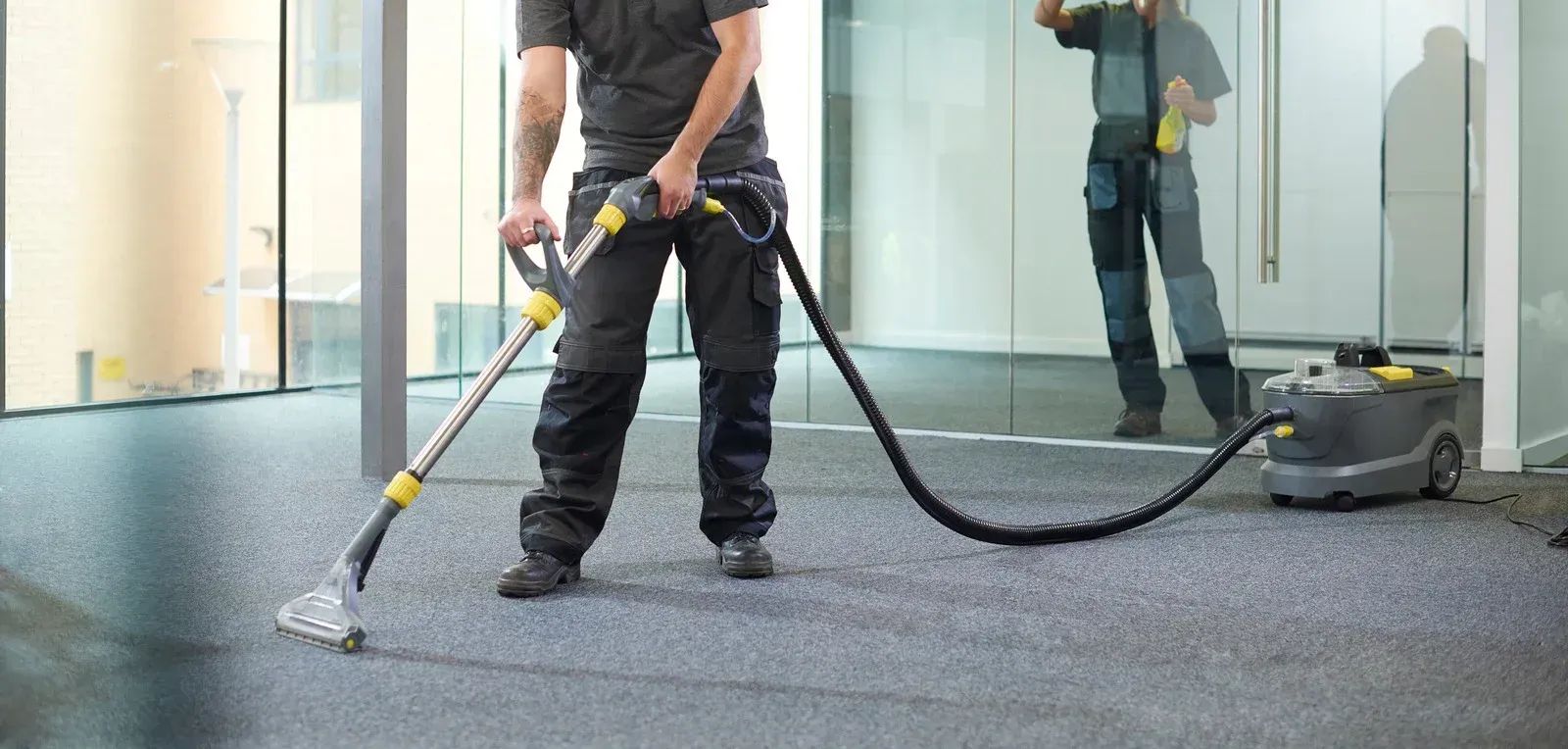
Nightly janitorial is the workhorse of most commercial cleaning programs. With the building empty, the crew can move furniture, run equipment, and clean thoroughly without working around people or disrupting operations.
Full-floor care
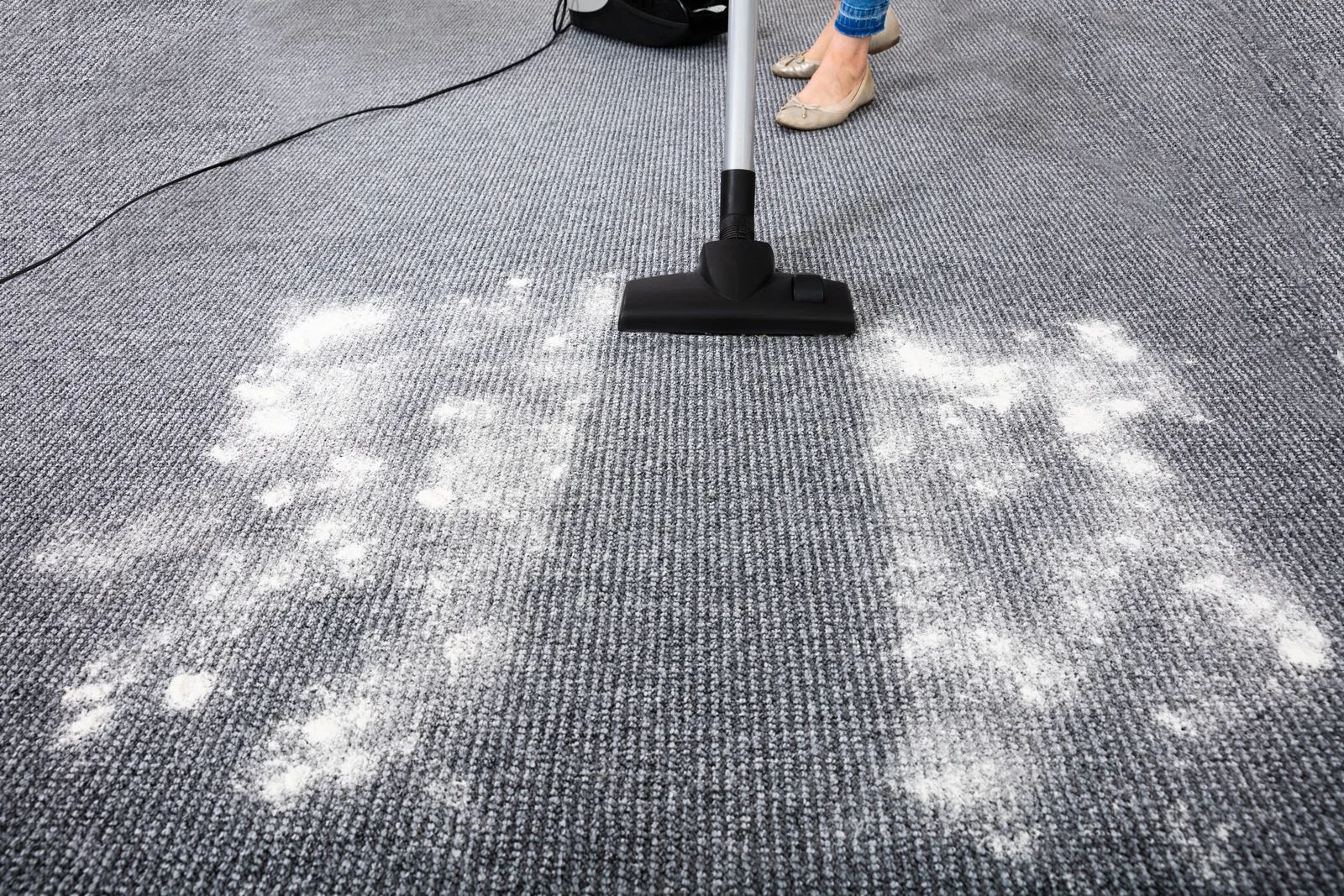
Every carpeted area gets vacuumed and every hard floor gets swept and mopped. Over time this routine attention is what keeps traffic lanes from setting into your carpet and keeps hard floors from going dull.
Complete trash and recycling removal
The crew empties every workstation bin and common-area receptacle, replaces liners, and hauls waste to the dumpster, so employees start the day with a clean slate.
Detailed restroom cleaning
Nighttime restroom work goes well beyond a porter's daytime touch-up. Crews disinfect toilets and urinals, scrub sinks and fixtures, mop floors, and address grout and corners that need real time to clean properly.
Dusting and detail work
Desks, sills, vents, baseboards, and other surfaces that collect dust get attention on a rotating schedule, along with the periodic detailing that keeps a facility from slowly looking tired.
WARNING: Do not assume a nightly-only program keeps a high-traffic building presentable through the afternoon. If your space fills with people by mid-morning, overnight cleaning is often undone hours before closing, and visitors see the worst of it.
The strength of nightly janitorial is thoroughness. The limitation is timing. No matter how well the crew resets your building overnight, that clean baseline starts eroding the moment your doors open the next morning.
How Foot Traffic and Facility Type Point to the Right Fit
The clearest way to decide between the two models is to look honestly at how many people move through your building and what they see while they are there. A few patterns hold true across most Carolinas facilities.
Lower-traffic offices
A professional office where the same small team works quietly all day often does fine with nightly janitorial alone. Messes accumulate slowly, few outside visitors pass through, and an overnight reset comfortably carries the space through the next day.
High-traffic and public-facing spaces
Medical and dental offices, retail floors, showrooms, fitness centers, and Class A office lobbies see constant turnover of people. Restrooms need attention several times a day and common areas are always on display, which is exactly where a day porter earns their keep.
Warehouses and distribution centers
These facilities usually run on nightly or scheduled cleaning built around production, with daytime coverage added only where breakrooms, offices, or restrooms see steady use across shifts.
Multi-tenant and mixed-use buildings
When several businesses share a lobby, entryways, and corridors, those common areas reflect on everyone. Daytime coverage keeps shared spaces presentable while nightly crews handle each tenant's deeper cleaning.
Run your own building through the same lens. If a restroom can look used within two hours of opening, or if a guest walking in at 3 p.m. would form an impression you would not want, daytime coverage belongs in the conversation.
When Combining Both Makes the Most Sense
For many facilities the honest answer is not one or the other but both, working together on a coordinated schedule. The two models complement each other cleanly when they are planned as one program.
Nightly sets the baseline
The overnight crew does the heavy lifting and returns the building to a fully clean state, tackling the floors, trash, and detailed restroom work that need an empty building.
Daytime protects it
The porter keeps that baseline from slipping while the building is occupied, so the space still looks close to its morning condition when the last visitor leaves.
Coordination prevents overlap
When the same provider handles both, the daytime and overnight teams share notes through a log so nothing gets double-cleaned and nothing gets missed. A spill a porter flags but cannot fully treat becomes a task for the night crew, and a recurring daytime problem informs how the overnight team preps the space.
Match the intensity to the building
Combined coverage does not have to mean a full-time porter. Many facilities run a porter for a set block during peak hours and a full nightly crew after close, scaling daytime hours up or down as traffic dictates.
The goal is simple: a facility that looks cared for at every hour, not just first thing in the morning. When daytime upkeep and after-hours cleaning are designed as a single plan rather than two disconnected services, your building reads as consistently professional to everyone who walks through it.
Frequently Asked Questions
Is a day porter the same as a janitor?
Not exactly. Both clean, but the roles differ in timing. A day porter maintains visible areas during business hours, while a nightly janitor handles deep cleaning once the building empties. Many programs run both together.
Can I run a day porter without nightly janitorial?
You can, but it is uncommon for most facilities. A porter handles daytime upkeep, not the heavy floor care, full trash removal, and detailed restroom work that keeps buildings hygienic. Porters usually supplement nightly service.
How do I know if my facility needs a day porter?
Look at foot traffic and visibility. If restrooms need restocking more than once daily, if spills appear regularly in public areas, or if visitors form impressions throughout the afternoon, a day porter is worth considering.
Does adding a day porter mean paying for two separate services?
It means coordinating two types of coverage, not necessarily two providers. Using one company for daytime and overnight work keeps teams communicating through shared logs, prevents duplicated tasks, and scales porter hours to peak times.
What types of facilities benefit most from a day porter?
Public-facing, high-traffic spaces gain the most: medical and dental offices, retail stores, showrooms, fitness centers, Class A office lobbies, and multi-tenant buildings with shared common areas. Any space where daytime appearance shapes professionalism strongly qualifies.
How does daytime cleaning avoid disrupting our operations?
A skilled porter works discreetly on a rounds-based schedule, timing visible tasks around busy moments and handling upkeep in the background. The work blends into the day rather than interrupting it, so professionalism matters greatly.
Keeping Your Facility Ready at Every Hour
The choice between a day porter and nightly janitorial comes down to when your building needs to look its best and how hard your daytime traffic works against that goal. Nightly cleaning gives you a thorough reset; a day porter keeps that reset from unraveling while people are watching. Match the model, or the combination, to how your space actually gets used, and your facility stays presentable from the first visitor to the last.
A consistently clean facility reflects directly on your business, and the right mix of daytime upkeep and after-hours janitorial keeps it that way through every shift. Serving Charlotte, North Carolina, Commercial Maintenance Specialist
brings more than 35
years of commercial-only experience and a full range of services, from day porter coverage and nightly janitorial to floor care, carpet, window, and disinfecting work, all built around how your building runs. Reach out to schedule a walkthrough and get a cleaning plan matched to your facility's traffic and hours.